
Why 5 Is the Perfect Age to Start Chores
Five-year-olds are at a magical developmental stage. They want to help. They're proud when they contribute. And they're just old enough to follow simple multi-step instructions.
Research shows that children who start doing chores between ages 3-6 develop:
- Better self-reliance and independence
- Stronger sense of responsibility
- Higher self-esteem from contributing to the family
- Better executive function skills
The key is choosing the right chores and the right reward system for their developmental stage. For a broader breakdown by age group, see our complete guide to age-appropriate chores from ages 2 to 18.
Age-Appropriate Chores for 5 Year Olds
Five-year-olds can handle more than you might think. Here are chores that match their abilities:
✅ Perfect for 5 Year Olds
- Make their bed - It won't be perfect, and that's okay!
- Put dirty clothes in hamper - Simple and builds routine
- Set the table - Napkins, forks, plates (not glasses yet)
- Clear their plate after meals - Scrape and stack
- Feed pets - With pre-measured food
- Water plants - With a small watering can
- Pick up toys - The classic, essential chore
- Put away clean laundry - In their own drawers
- Wipe down surfaces - With a damp cloth
- Help sort laundry - By color or family member
❌ Too Advanced for Most 5 Year Olds
- Anything involving sharp objects or chemicals
- Unsupervised cooking or stove use
- Taking out heavy trash bags
- Cleaning bathrooms (chemicals + slippery surfaces)
- Tasks requiring reading instructions
Why Digital Chore Charts Work Better for This Age
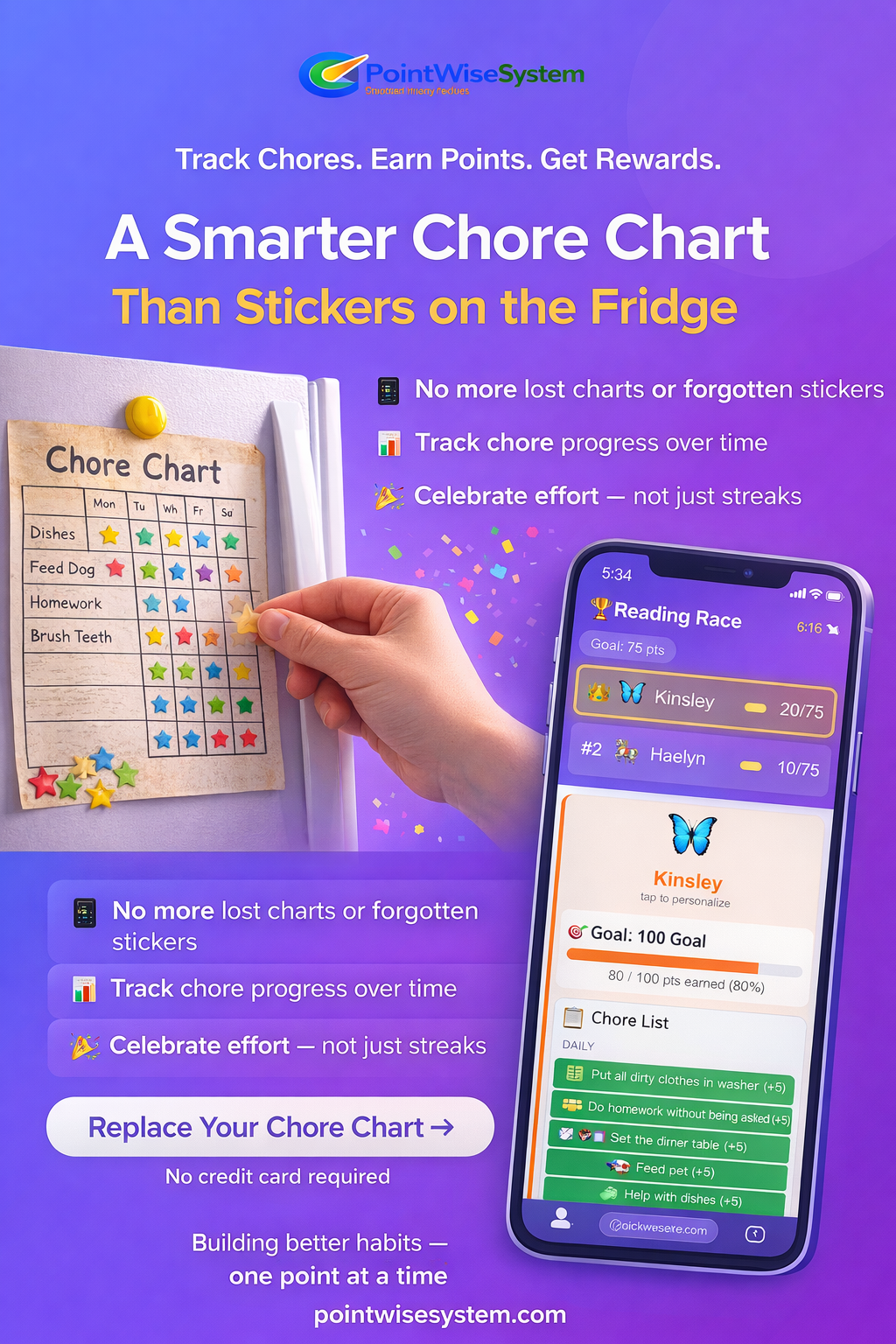
Paper chore charts have a problem: 5-year-olds can't read them well, and stickers lose their appeal fast.
A digital chore chart like PointWiseSystem works better because:
- Visual icons - Emojis show what each task is (🛏️ = make bed)
- Instant feedback - Points go up immediately with a satisfying animation
- Tangible progress - They can SEE their points growing
- Real rewards - Points convert to things they actually want
- No reading required - Icons and colors guide them
Setting Up a Chore Chart for Your 5 Year Old
Step 1: Start Small
Don't overwhelm them. Start with 3-4 daily chores:
- 🛏️ Make bed (5 points)
- 🧸 Pick up toys (5 points)
- 👕 Clothes in hamper (3 points)
- 🍽️ Clear plate after dinner (3 points)
Step 2: Set Achievable Rewards
Five-year-olds need quick wins. Set rewards they can earn within a day or two:
- 15 points: Extra story at bedtime
- 25 points: Choose the movie for family movie night
- 50 points: Trip to the playground
- 100 points: Small toy from the store
Step 3: Make It Visual
Use Kiosk Mode on a tablet in the kitchen. Your child can tap their completed chores themselves and watch their points grow. The visual feedback is incredibly motivating at this age.
💡 Pro Tip: The "Helper of the Day" Approach
Five-year-olds love special roles. Create a "Helper of the Day" bonus task worth extra points. It could be helping set the table, feeding the dog, or any task that makes them feel important.
Common Mistakes Parents Make
1. Expecting Perfection
A 5-year-old's "made bed" will have lumps. Their "picked up toys" might miss a few. Praise the effort, not the result. Perfection comes later.
2. Too Many Chores at Once
Start with 3-4 chores. Add more only when those become routine. Overwhelming them leads to resistance.
3. Rewards That Are Too Far Away
A 5-year-old can't conceptualize "save up for a month." Keep small rewards achievable within 1-2 days, medium rewards within a week.
4. Inconsistency
The chore chart only works if you use it every day. Make it part of the routine, not something you remember occasionally.
5. Doing It For Them
When they struggle, guide them - don't take over. "Let me show you how" is better than "I'll just do it."
Sample Weekly Chore Schedule for a 5 Year Old
| Time | Chore | Points |
|---|---|---|
| Morning | Make bed | 5 |
| Morning | Get dressed without help | 5 |
| After meals | Clear plate | 3 |
| Evening | Pick up toys | 5 |
| Evening | Clothes in hamper | 3 |
| Weekly | Help sort laundry | 10 |
Daily total: ~21 points - Enough to earn a small reward every day or two!
Making Chores Fun for 5 Year Olds
Turn It Into a Game
- "Can you pick up all the toys before the song ends?"
- "Let's see how fast you can make your bed!"
- "You're the official table-setter today!"
Work Together
Five-year-olds love doing things WITH you. "I'll fold the towels while you match the socks" makes chores feel like quality time.
Celebrate Wins
When they complete their chores, make a big deal of it. "You earned 21 points today! That's amazing!" The positive reinforcement matters more than the points.
What About Allowance?
At 5, most experts recommend keeping chores and allowance separate. Chores teach responsibility; allowance teaches money management. They're different lessons.
That said, the point system can work like an allowance if you want:
- 100 points = $1 toward a toy
- Or keep points for non-monetary rewards (screen time, activities, privileges)
There's no wrong answer - do what works for your family.
🎯 Ready to Start Your 5 Year Old's Chore Chart?
PointWiseSystem makes it easy with pre-loaded tasks perfect for young kids. Visual icons, instant feedback, and rewards they'll actually want. Start your free trial - no credit card required.
Start Free Trial →Frequently Asked Questions
What if my 5 year old refuses to do chores?
Start with ONE chore they're willing to do. Make it easy, make it fun, and celebrate when they do it. Build from there. Forcing multiple chores at once creates resistance.
Should I pay my 5 year old for chores?
Most child development experts suggest keeping chores and money separate at this age. Points that convert to privileges (screen time, activities) work better than cash for kindergarteners.
How long should chores take for a 5 year old?
Individual chores should take 2-5 minutes. Total daily chore time should be 10-15 minutes max. Keep it short and successful.
What if they do a bad job?
Praise the effort, not the result. "Great job making your bed! I love that you did it all by yourself." You can gently improve technique over time, but at 5, participation matters most.